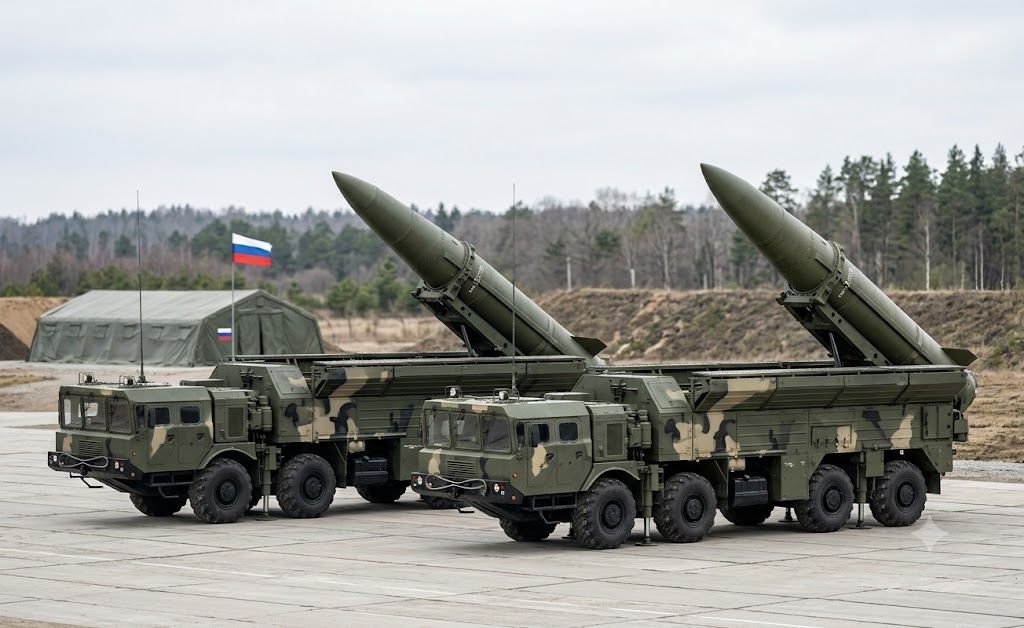
The geometry of the air war over Ukraine has fundamentally shifted. For over four years, Western policymakers have lauded the resilience of Ukraine’s integrated air defense network. However, the events of late summer 2026 reveal a grim mathematical reality: Russia has successfully recalibrated its strike packages to exploit critical shortages in Ukraine's most advanced interceptor stockpiles, specifically for the U.S.-supplied Patriot systems.
This tactical evolution was starkly demonstrated during the massive overnight barrage on August 1, 2026. The results of that strike serve as a structural warning that the balance of the air war is tipping in Moscow's favor.
The Mathematics of Exhaustion: The August 1 Strike
The August 1 assault on Kyiv and surrounding regions was a masterclass in overwhelming depleted defenses. According to the Ukrainian Air Force and President Volodymyr Zelensky, Russian forces launched a complex, multi-vector attack comprising 185 attack drones and 35 missiles.
Crucially, the composition of the missile package was designed to maximize penetration. Of the 35 missiles, 27 were high-velocity Iskander-M and S-400 ballistic missiles. The success rate for the Russian Aerospace Forces was devastating. Ukrainian air defenses managed to intercept only one of the 27 incoming ballistic missiles.
The remaining 26 ballistic weapons, traveling at high arcing trajectories that give air defense operators mere minutes to react, struck their targets in Kyiv, Dnipropetrovsk, Sumy, Kharkiv, and Poltava. In the capital alone, the strikes caused widespread destruction, leaving at least nine dead and 30 injured. President Zelensky was explicit in his assessment: the 1-in-27 interception rate was not due to a failure of radar or operator skill, but rather a direct result of a "critical shortage of Patriot interceptors".
The Ballistic Pivot
The August 1 strike is not an isolated anomaly; it is the culmination of a deliberate Russian strategic pivot. While Ukrainian forces maintain an impressively high interception rate against slower-moving Shahed drones and older cruise missiles (routinely destroying around 90% of these threats), Russia has realized that ballistic and hypersonic weapons guarantee strategic impact.
In July 2026 alone, Russia launched 126 ballistic missiles—a staggering increase compared to the estimated 200-300 fired throughout the entirety of 2024.
The Production vs. Depletion Asymmetry
This pivot is driven by industrial mobilization. While Russia’s monthly production capacity is estimated at roughly 60 Iskander-M and 40 S-400 missiles, Moscow is increasingly willing to dip into its strategic stockpiles. In July 2026, Russian forces fired over 107 ballistic missiles and 20 hypersonic Zircon missiles, intentionally exceeding their monthly production rates.
Russian planners are accepting this inventory drawdown because the return on investment is extremely high. By launching massive swarms of cheap decoy drones to bait Ukrainian radars, followed by a dense salvo of ballistic missiles, Russia forces Ukraine into a paralyzing dilemma: expend multi-million-dollar Patriot interceptors (which are not being replenished by Western allies fast enough) on lesser threats, or hold fire and allow critical infrastructure to be destroyed.
Conclusion: An Unsustainable Trajectory
The strategic implications are severe. If current trends continue, military analysts project that Russia could fire upwards of 840 ballistic missiles in 2026. Without an immediate, massive influx of advanced anti-ballistic interceptors from international partners, Ukraine’s interception rate against these high-end threats will remain critically low.
As President Zelensky warned, this interceptor deficit actively encourages further strikes. Unless the Western defense industrial base can rapidly scale the production and delivery of Patriot munitions, Russia's ability to systematically dismantle Ukraine's strategic rear with ballistic strikes will only accelerate, fundamentally altering the trajectory of the war.